
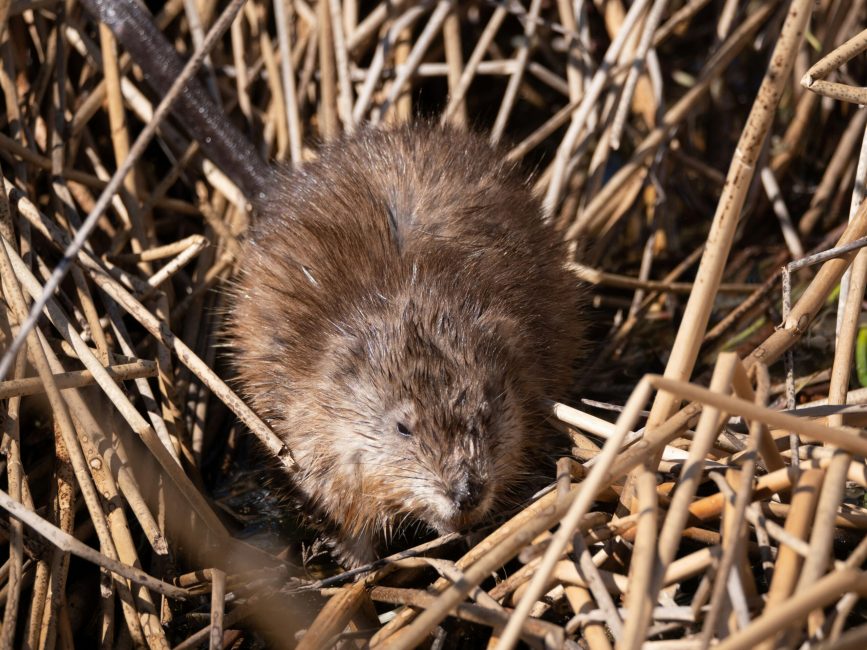
As a young child, Veronica Favel was carried out along the trapline with her family throughout the Cumberland Marshes in northeast Saskatchewan. Except that she can hardly remember that way of life, when families led a nomadic life from lake to lake. What she does remember is her father bringing in over 100 muskrat pelts a day, their families moving to their traplines, working together to prepare 3,000–5,000 pelts over the course of the trapping season—a few thousand out of the millions of muskrats that inhabited the Saskatchewan River Delta, the largest inland freshwater delta in North America.
“Until I was about ten, eleven years old, and then it just stopped. It just ended,” she recalls. The moose, the deer were on a steady decline. Even more worrying: so was the water, the base life source for the entire deltaic ecosystem. The opening of the SaskPower E.B. Campbell Hydroelectric Dam in 1963 had initiated a whole host of ecosystem changes downstream, exacerbated by drastic changes in water levels, from devastating flash floods to the drying up of the Cumberland marshlands. The disappearing delta is at risk of becoming Canada’s equivalent of the Aral Sea.
Over sixty years later, the situation has only become more dire for the Village of Cumberland House (Métis side) and the Cumberland House Cree Nation (Reserve side). “It’s a very valuable traditional way of life here, but we’re in survival mode right now,” says Denise McKenzie, Favel’s fellow co-founder of the Iskwewak Indigenous Saskatchewan Women’s Environmental Water Advocacy Keepers, or ISKWEWAK. They are also both members of the N-90 Trappers Association. Denise McKenzie is the Coordinator of the N-90 Trappers Delta Restoration Project. Referring to the dam and its poor management, she explains that “they can dry us out for weeks with no water coming through, or they can flash flood us. That devastation just flushes through the lands.
That flood was certainly catastrophic, but it’s the slow drying up of the marshlands and lakes in the delta that has significantly altered the four seasons of life for the communities in Cumberland House. “We’re island people, delta people,” says McKenzie, but Cumberland Lake, where most of the community lives, has shrunk drastically. Whereas the lake used to be about 40 feet deep and 48 kilometers across, the lake is now only 2 feet deep and 3 kilometers wide.
The result is that it’s difficult to take a boat through the silted, stagnant waters. The community’s commercial fishery has gone bust, too. Favel laments the declining opportunities to go out on the land together, with their young ones and their elders, “with both of them combined so that knowledge is shared.”
Favel and McKenzie are fighting back hard, however. The lives of their children and grandchildren depend on it. In 2019 they held their first action below the E.B. Campbell Dam, a small ceremony at the spillway with a group of women led by a drummer and an elder. A Cree announcer covered the gathering for the MBC northern radio station, and people heard the call. After the COVID-19 pandemic, they teamed up with the University of Saskatchewan, which provided institutional support, and they sought out more media stories that raised wider awareness to the risk—and consequences—of losing the delta. “The whole community has actually changed,” says McKenzie, as people saw positive changes begin to shape the marshes, beginning first with restoration projects organized by the N90 Trappers Association, then land-based education started up, and the fisherman’s co-op started cleaning up the logjams in the river. “Restoring, restoring the delta,” repeats Favel, “restoring the river with whatever funding people can get – in little pockets there is action happening.”
The work by the N90 Trappers Association, for example, is the subject of a forthcoming National Film Board of Canada documentary. With a modest budget of $50K/year funded by Fish and Wildlife and Ducks Unlimited Canada, as well as SaskPower as of this year, McKenzie coordinates the work of a six-man crew, working 12 weeks of the season to clear brush and fallen trees and to unclog the blocked gates and weirs. They’ve managed to open and maintain one vein of water flow through 1000 square kilometers, from the inflow to the outflow.
But their bigger goal? Remove 44 gates, canals, and weir structures throughout the wetland, and replace them with 7 rock weirs that are more naturalized, that fish can pass through, and that N90 Trappers can still cross. Ducks Unlimited Canada wrapped up a preliminary report this summer, and the N90 Trappers are hoping for approval from the Department of Fisheries and Oceans (DFO) in the next year. The Nature Conservancy is on deck for future funding support.
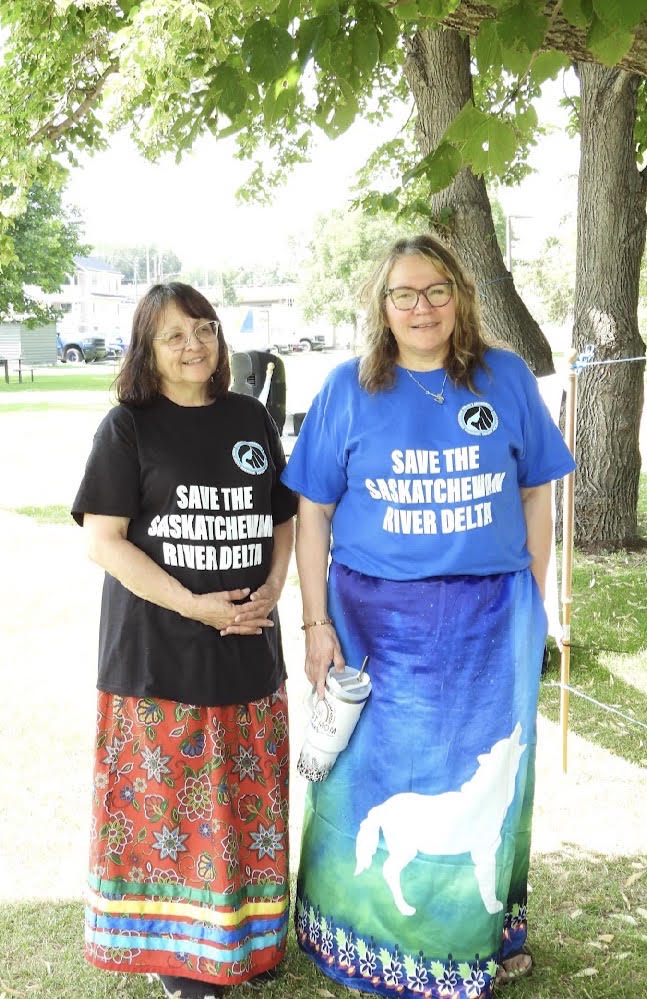
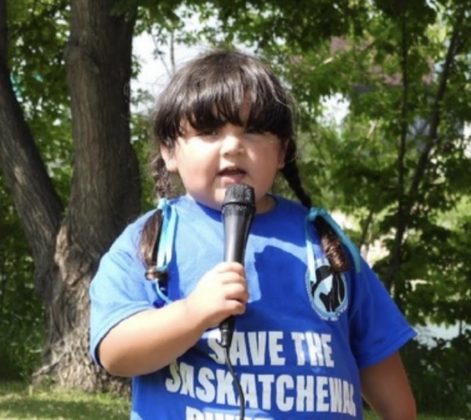
Both Favel and McKenzie’s faces light up when they describe how the young ones are paying attention to the river now. In the process of this restoration and advocacy work, the community is gathering again, old and young. Instead of walking out on the land together, however, they’re coming together in ceremony and advocacy work. This past August, as in past years, they convened again at the E.B. Campbell dam, then drove south (upriver) to Saskatoon and then down to Regina, calling for greater care of their delta.
Now Favel and McKenzie are preparing for their trip to the UN Water Conference in the United Arab Emirates this coming December. They’ll be joined by two local Métis Nation Representatives and two team members from the University of Saskatchewan College of Medicine—building upon a research partnership that is proving impactful for both sides. The research looks at water-related practices, perceptions and Traditional Knowledge Indicators for human health. Together, they’ve co-authored several articles on the decline of the Saskatchewan River Delta and the urgent need for Indigenous, community-led water governance. Which is what they’re hoping for out of the UN Conference: for Indigenous Knowledge to inform Canada’s National Water Security Strategy.
As it stands, decision makers “do not seem to know the value of the water system.” Both Favel and McKenzie are clear-eyed about the additional threats coming their way: a $4.4 billion dollar irrigation project coming soon to Lake Diefenbaker and the insatiable thirst of future data centres in Alberta and Saskatchewan. Proposed projects would impact the winding snow-fed South and North Saskatchewan Rivers who flow from the rocky mountains throughout the prairies. Undaunted, “we have to raise our voices…we didn’t create this mess,” McKenzie notes. They’re working tirelessly, fiercely, for the life of the delta, which is also their very way of life.
Knowledge and Stories from: Denise McKenzie & Veronica Favel
Story writing by: Geoff Martin
Editing by: Natalija Vojno
This story is part one of a series featuring Indigenous Knowledge and leadership in watershed governance across Canada.
